Read-along: The White Hot by Quiara Alegría Hudes
A 2026 Shields Prize Finalist, The White Hot is the first book we are highlighting in our read-along series. Today, we share a review by bookstagrammer Rochelle, a video of Quiara reading during our event in Toronto this past June, and some questions you can use to reflect about your own reading journey, or with others during book club or a buddy read.
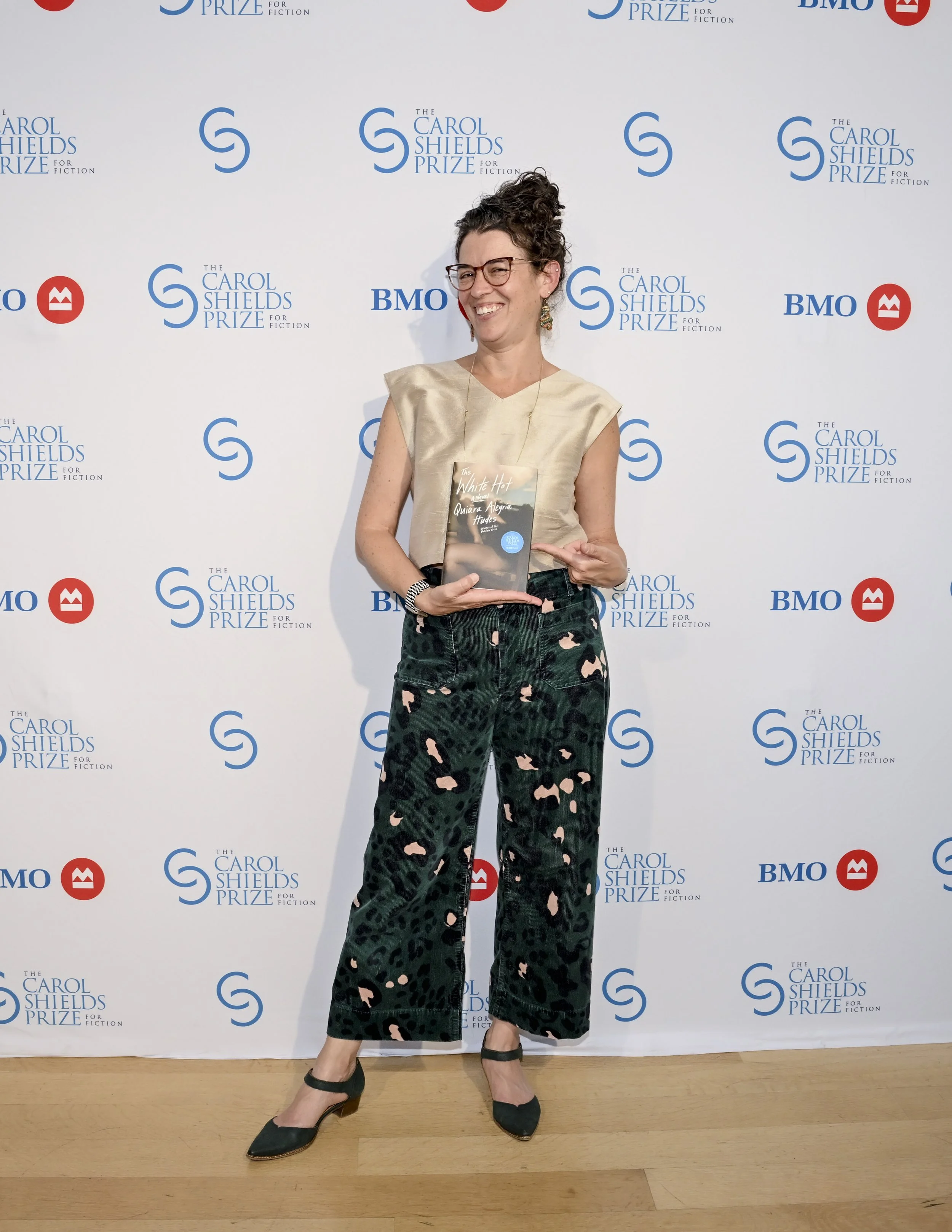
Quiara Alegría Hudes at the Shields Prize Ceremony. Credit: Alex Lam for George Pimentel Photography.
The White Hot Book Review by Rochelle
I have only read one book twice this year, and it was The White Hot by Quiara Alegría Hudes.
The White Hot is written as a letter from a mother to her daughter, to be read on her 18th birthday, years after the mother has left. It isn’t an apology of sorts or an attempt to make amends; it’s an explanation of what happened that day so many years ago and why she made the choices she did.
April Soto gave birth to Noelle when she was just sixteen. She was a gifted but troubled student, prone to fits of rage and a bad attitude. She left school when she got pregnant, went to work, and raised her daughter alongside her abuela. April held it together the best she could until she couldn’t. After an experience at Noelle’s school in which she sees herself reflected in Noelle, April reaches her breaking point and buys a one-way bus ticket out of town.
This epistolary novel explains what happened after April left, how she began to understand herself, and how she dealt with the guilt of her past and what she had left behind.
April is an unforgettable character, complex and tough on the outside, with a deep vulnerability beneath the surface that is not easily shown to the world. She seems haunted by unspoken family secrets and intergenerational trauma. As she explores life on her own terms, she re-experiences the adolescence she lost when she became a teenage mother and gains a sense of her true self.
I have never seen rage explored in a novel so vividly and fiercely. The reader feels like they are experiencing April’s emotions in all their intensity in their own body. I ached for April. I felt her anger, her pain, her guilt, her resentment, her longing, and her desperation. We clearly see the impact of absence, trauma, and silence.
The first time I read The White Hot, I had a physical copy in my hands. The second time, the experience was heightened by Daphne Rubin-Vega’s soulful narration. The audiobook is an experience not to be missed.
Pick up The White Hot if you want an unforgettable reading experience that explores motherhood and emotions in all their complexity.
Make sure to follow Rochelle! https://www.instagram.com/rochelles_reading_journal
“In THE WHITE HOT, a woman, a mother, a daughter of immigrants, does the unthinkable: She leaves. April Soto has inherited a legacy of seeking from foremothers who had to ‘escape in order not to die.’ With unflinching and embodied prose, Quiara Alegría Hudes brings us along April’s wrenching and immersive journey. The novel’s epistolary narrative eschews ‘right vs. wrong’ to raise a more labyrinthine set of questions about rage, duty, and motherhood, to which there are no comfortable answers. At the heart of this masterful work is the most uncomfortable question of all: ‘How could love look like leaving?’”
Watch Quiara Reading from The White Hot
Reflection Questions About The White Hot
1) “There is a legacy of departure and seeking, Noelle, that is your inheritance, too. Despite all the domestic playacting, you are born of journeywomen. Know this, remember this, when you step toward places you’re not meant to go” (p. 31). As you read April’s letter to Noelle, what do you think are April’s intentions? Reconciliation? Understanding? Is it a cautionary tale?
2) April and Noelle live in an intergenerational household with April’s mother and grandmother. Did any of these women especially resonate with you or people in your life?
3) When Kamal shows April Charles Mingus’ jazz, April gets completely lost in the music, and the songs allow her to connect with her self and her emotions like never before. Are there any artists, albums, or books that have done something similar to you? What feelings do they evoke for you?
4) April asks the librarian for a list of books in which a mother leaves her child. What do you think the novel is suggesting about the way that we see ourselves in literature or that literature can help us better understand ourselves? What was April looking for?
5) April makes several difficult decisions about herself and her family throughout the novel. What surprised you the most?
6) What are some of your favorite passages about motherhood, anger, and freedom?
