Interview: Diamond Braxton is the 2025 Carol Shields Prize Foundation Residency at Hedgebrook Recipient
Located on Whidbey Island, WA, Hedgebrook is a global community of women writers and people who seek extraordinary books, poetry, plays, films, and music by women.
Hedgebrook selects one woman-identified writer from the United States or Canada to receive the Carol Shields Prize Foundation Residency at Hedgebrook, a twelve-day residency to further a literary project. The residency includes a private cottage and all meals. Learn more on our programs page.
“As an emerging writer of color, I have experienced plenty of rejection and moments of not feeling seen, valued, or understood by literary and institutional spaces. Receiving the Carol Shields Prize Foundation Residency at Hedgebrook was an enormous affirmation at a crucial point in my career. This accomplishment reminds me that my work has worth and value, that people see what I am working toward, and that others believe in the growth of my writing. Because of this, I feel more energized than ever about my collection, future projects, and trajectory towards being a published author.”
We asked Diamond Braxton, the 2025 recipient, some questions about their transformative experience. Diamond talked about the importance of receiving the residency, and the short story collection she is working on, Tell Me About Your Mother, which she is currently querying. Read one of the stories, "Dreams of the Fam Who Came Before Me," on Foglifter.
The Carol Shields Prize for Fiction (CSPF): Can you tell us about your time at Hedgebrook?
Diamond Braxton: Hedgebrook was a life-changing opportunity for both my writing career and my personal growth. As a Houston-born-and-raised writer, I had never experienced such a beautiful, nature-filled place in solitude. During my residency, I generated and finished stories for my collection while also meeting and building community with other incredible women and non-binary writers. I learned how to build a fire, spent time in deep conversation, and connected with a part of myself and my creative work that can sometimes feel impossible to access at home. I’m grateful for the time, the land, the chefs, the writers, and the peaceful atmosphere Hedgebrook creates. There truly is nothing like it, and I am still dreaming about my return.
CSPF: What does receiving the Carol Shields Prize Foundation Residency at Hedgebrook mean to you? What is its importance at this point in your career?
Diamond: It means everything to me. As an emerging writer of color, I have experienced plenty of rejection and moments of not feeling seen, valued, or understood by literary and institutional spaces. Receiving the Carol Shields Prize Foundation Residency at Hedgebrook was an enormous affirmation at a crucial point in my career. This accomplishment reminds me that my work has worth and value, that people see what I am working toward, and that others believe in the growth of my writing. Because of this, I feel more energized than ever about my collection, future projects, and trajectory towards being a published author. I couldn’t be more thankful.

Diamond in front of the Waterfall Hedgebrook Cottage
CSPF: What are the major themes or ideas that your work contemplates? Can you tell us a bit about the project you worked on while at Hedgebrook?
Diamond: At Hedgebrook, I worked on generating stories for my collection, Tell Me About Your Mother, a feminist, genre-bending short story collection set along the Gulf Coast. The collection blends horror and the fantastic to explore a feral hunger for maternal love in a capitalist America that profits by keeping mothers and daughters apart. In the title story, a young chef reeling from her mother’s death in a Houston hurricane forges an intense bond with another chef, only to discover that something sinister is unfolding at the luxurious dinners she hosts. Across the collection, haunted houses, magical ponds, dreams, and portals become battlegrounds where queer Black and Latinx women reckon with inheritance, desire, and what it means to be a daughter. The stories ask what happens when the love we need is withheld from us and what kinds of worlds we might have to imagine to survive. At Hedgebrook, I was able to continue developing these stories and explore the collection’s central questions all while being in the cutest cabin!
CSPF: What draws you to fiction?
Diamond: I am drawn to fiction because it allows me to investigate the intersections of race, class, family, place, and queerness through genre-defiant storytelling. Influenced by my study of Black feminist theory, my work considers how Western expectations take root in marginalized families and how my characters want their mothers’ love, but what happens when oppressive forces make that love difficult or impossible to access? Fiction allows me to explore those questions through imagining. I can merge critical theory with the visceral and the strange: a haunted house, a rupture, a dreamscape, a portal to another world. For me, fiction creates a space where theory, personal experience, and the impossible can exist together, allowing both the reader and me to question the world we live in while imagining the possibility of something greater.
CSPF: What is the importance of supporting women and non-binary writers?
Diamond: Incredibly important. Assata Shakur says, “Part of being a revolutionary is creating a vision that is more humane. That is more fun, too. That is more loving. It’s really working to create something beautiful.” I believe that uplifting women and non-binary writers contributes to this vision. By adding our voices to the literary landscape, we write ourselves into history, the present, and the future; we demonstrate that there are more voices, identities, and experiences in the world that can expand our understanding of the scope of our humanity. This support is necessary to better understand ourselves, each other, and the world we all inhabit in order to “create something beautiful” and pave the way toward a more loving, humane future.
About Diamond Braxton:
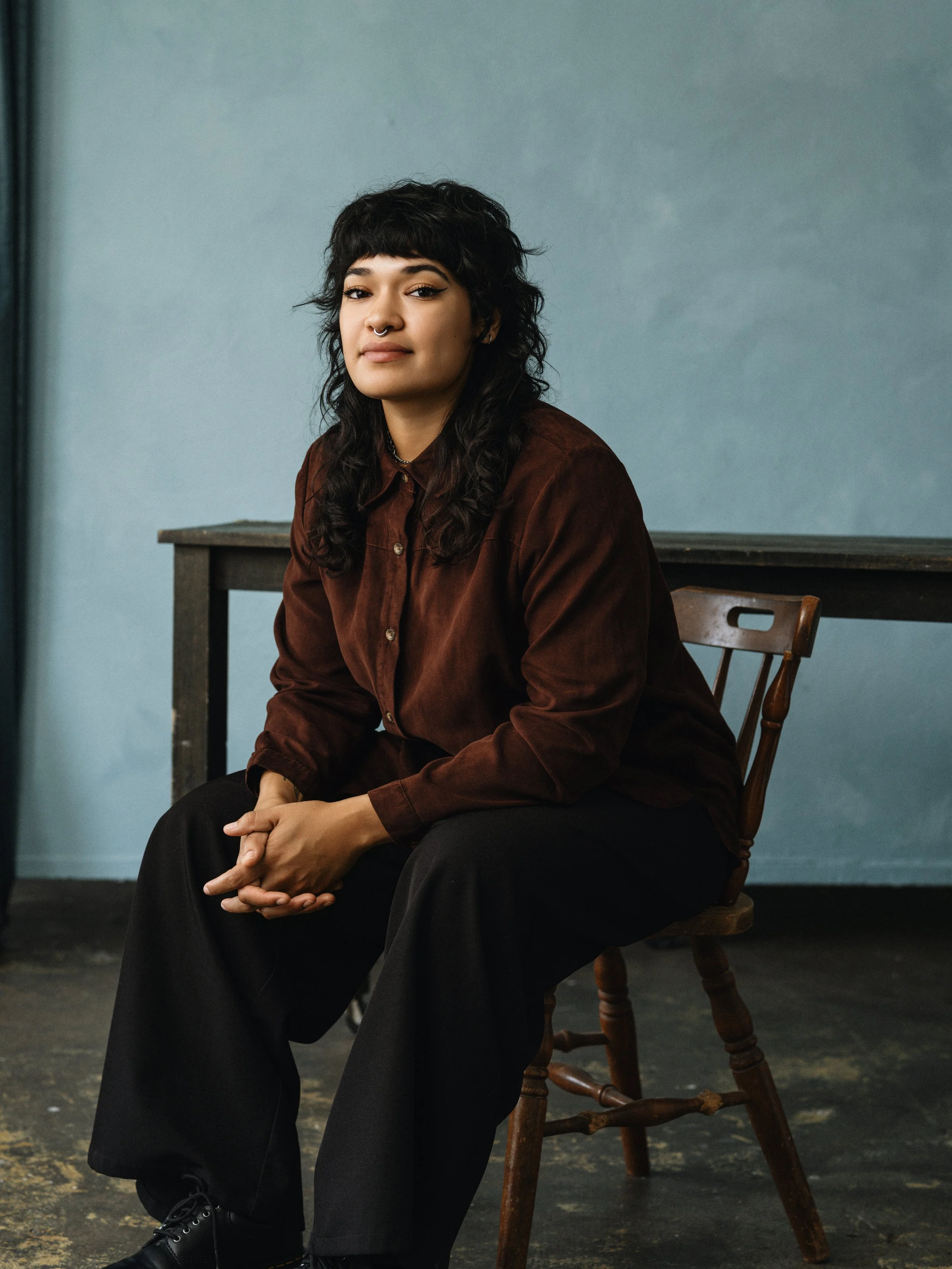
Diamond Braxton "MANTÉ" (they/she) is a queer, mixed-race Black and Mexican American writer, publisher, and educator based in Texas. She has work published or forthcoming in Southern Humanities Review, Autostraddle, Best Microfiction 2023, Sundress Publication's Best of the Net anthology, The Forge, Foglifter, and others. They are a Lambda Literary and Tin House workshop Alum and attended Hedgebrook in 2025 where she was named the 2025 Fellow for The Carol Shields Prize Foundation Residency. In 2026, she was named the Residency Fellow for Black and/or Indigenous writers from SAFTA. She is the Founder and Director of Abode Press, a 501(c)3 anti-racist publishing press based in Texas where they publish books that remind them of home. She is currently working on a novel and a collection of genre-bending Texan stories.
